Singer Renée Fleming Shares the Healing Power of Music
The star soprano has helped spearhead a study on the positive impact that music can have on the brain.
The star soprano has helped spearhead a study on the positive impact that music can have on the brain.
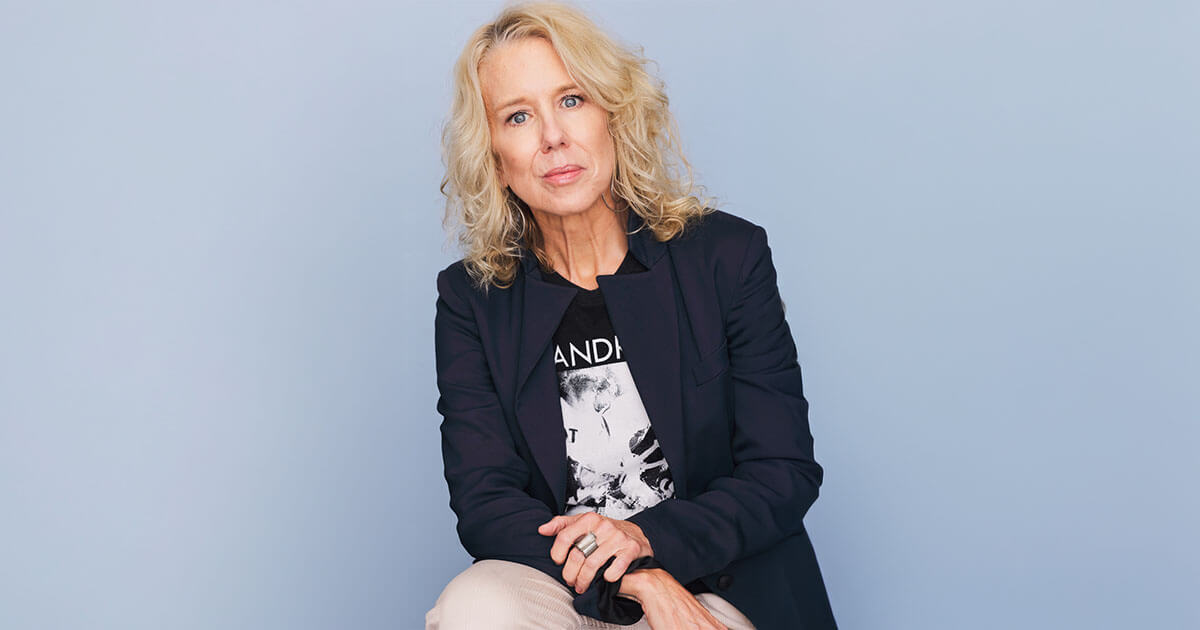
When singer Renée Fleming thrills concert audiences in New York, London, Paris, or any number of other cities worldwide, she experiences the powerful effect music has on her mood and health. “I have the privilege of being in a flow state almost every time I perform. I feel so happy and calm when I get off stage,” she says.
But it wasn't always that way. While a student at Juilliard, Fleming experienced back spasms twice before auditions. Her own research led her to an article suggesting that these episodes could occur due to psychological stress—in her case, stage fright and performance anxiety. After that realization, Fleming began reading about the mind/body connection, and she discovered that neuroscientists were looking at music and the brain.
Read More: The Brain Science Behind Anxiety
Fleming has since learned a lot about the positive impact—including reducing stress—that music can have on the brain. She has even helped spearhead a collaboration among the National Institutes of Health (NIH), the John F. Kennedy Center for the Performing Arts, and the National Endowment for the Arts to study the subject. The joint initiative, called Sound Health, supports research into music's effect on the brain and its potential clinical applications, including treating symptoms of Parkinson's disease, stroke, chronic pain, mental illness, and more. This program led to the foundation of the Sound Health Network at the University of California, San Francisco.
Fleming's involvement in and advocacy for creative arts, health, and neuroscience resulted from her meeting then NIH director Francis S. Collins, MD, PhD, at a Washington, D.C., dinner party in 2015, where they experienced—rather unexpectedly—the healing power of music. To help break the tension in a room full of differing political views, Fleming suggested a spontaneous sing-along, accompanied by Dr. Collins, a lifelong musician, who had brought his guitar to the dinner. The communal singing, which included the folk ballad “This Land Is Your Land” and Bob Dylan's “The Times They Are A-Changin’,” worked its intended magic, with everyone, including Supreme Court justices Ruth Bader Ginsburg and Antonin Scalia (who were friends but ideological opposites), harmonizing.
On the Brain & Life podcast, Renée Fleming shares how her personal life and career led to her working with experts around the world to author her book Music and Mind: Harnessing the Arts for Mental Wellness. Dr. Correa is later joined by Dr. Collins, who explains the connections between brain health and the arts.
That night, Fleming told Dr. Collins that she had accepted an invitation to serve as an artistic adviser-at-large for Washington's Kennedy Center for the Performing Arts. Already a National Medal of Arts winner, Fleming would receive the Kennedy Center Honors in 2023. She has mastered the most challenging roles in the opera repertoire and also earned a Tony nomination for her performance in the 2018 Broadway revival of Rodgers and Hammerstein's Carousel.
Speaking with Dr. Collins at that Washington dinner party, Fleming mentioned her long-standing curiosity about whether music could positively affect health and well-being. “I knew that scientists were studying music and wanted to know why,” she says. “Francis told me that because music affects every mapped area of the brain, he and others wanted to understand more about it.”
As an auditory signal, music is first processed by the brain in the auditory cortex. “Then it connects to the amygdala, which generates emotional responses, including a release of dopamine that may induce chills or tears,” says Dr. Collins.
Music can activate the autonomic nervous system, explains Alexander Pantelyat, MD, FAAN, associate professor of neurology and co-director of the Johns Hopkins Center for Music and Medicine in Baltimore. Since one function of the autonomic nervous system is to lower levels of cortisol (the stress hormone), music's effect results in reduced stress and anxiety, he says. “For these and other reasons, society recognizes that music and the other arts have an important role to play in wellness,” says Dr. Pantelyat.
To see which areas of the brain are affected by music, Fleming underwent a functional MRI (fMRI) while she sang. The scans revealed more brain activity when Fleming was imagining singing than when she actually sang. Singing, the scientists concluded, is second nature to a professional, but imagining singing, against the backdrop of the noise from the fMRI machine, required more effort.
Dr. Collins believes that music has provided humans with a strong evolutionary advantage since prehistoric times by fostering well-being, social interaction, cooperation, and imagination, which may increase longevity and improve cognitive abilities. Research suggests that music appeared early in human history—singing may even have preceded speech, according to a study in Frontiers in Neuroscience in 2014.
While stories of music's positive influence date back to antiquity—as with the lyre playing by Orpheus of Greek mythology and King David in the Old Testament—music therapy did not develop as an applied science until the 20th century, partly in response to the post-traumatic stress experienced by soldiers in the two world wars. Music therapy began to be recognized and adopted by medical and psychiatric professionals after returning soldiers benefited from listening to, playing, or singing music when it was integrated into their physical and occupational rehabilitation as well as into recreation and education. Today, more than 3,500 practitioners belong to the American Music Therapy Association.
“Expressive therapies such as music, art, drama, dance, literature, and poetry may be especially beneficial for those who have experienced emotional or physical trauma, such as military veterans, those living with dementia, and persons with language or motor deficits after stroke or traumatic brain injury,” says Daniel C. Potts, MD, FAAN, a neurologist at the Tuscaloosa VA Medical Center in Alabama.
A study in Neurologia in 2017 showed that listening to or singing familiar songs, especially ones from youth, can reduce agitation and anxiety in people with cognitive difficulties or memory loss. Other research, including a 2018 study commissioned by Chorus America, an advocacy and education organization for choral groups, found that older adults who rehearse and perform in choirs are less likely than the older general public to report cognitive challenges. And nearly 20 percent report that participating in choirs has helped them with one or more health conditions.
Read More: How Music Affects Memory in Those with Dementia
Still, the field of music therapy could use more evidence-based research. “We need more rigorous clinical trials to demonstrate the efficacy of music therapy, so more insurers will recognize it as a reimbursable expense,” says Dr. Collins, noting that the NIH has developed a tool kit to help trial designers meet those standards.
“Some insurers are recognizing music therapy as a billable/reimbursable expense,” says Daniel J. Levitin, PhD, professor emeritus of psychology at McGill University in Montreal and author of This Is Your Brain on Music. The next step, he says, would be to broaden insurance coverage and promote music therapy to hospital and clinic administrators and health care companies.
Fleming says that would make economic sense. In a report on the potential economic impact of music therapy on Alzheimer's disease, the consulting firm KPMG estimated that if just 30 percent of the 6 million people over 60 with Alzheimer's and related dementias engaged regularly in music therapy instead of taking medications, it could add nearly a billion dollars in cost savings to the U.S. economy. Current annual expenditure on music therapy for people with Alzheimer's is estimated to be around $800 a year per person. By contrast, Medicare expects to spend $3.5 billion a year on new Alzheimer's drugs in 2025, according to a spokesperson for the Centers for Medicare and Medicaid Services.
Music-based interventions have been shown to strengthen or repair critical pathways in the brain that are damaged by Alzheimer's and other neurologic disorders. “In the past 10 years or so, we've discovered many of the underlying mechanisms that make music effective as a therapy for a variety of conditions,” Dr. Levitin says. “In Parkinson's, for example, the steady rhythm of music at the appropriate tempo, a therapy known as rhythmic auditory stimulation, can help with the freezing and shuffling gait by retraining neurons in the basal ganglia (the regions of the brain that coordinate voluntary movement) to regulate movement at a steady pace.”
Dancing and rhythmic movement exercises also may improve balance and posture and reduce the risk of falling. “For people in chronic pain, listening to music can release pain relievers, such as endorphins,” says Dr. Levitin, adding that people may be more likely to stick with music-based therapy since music is already part of most people's lives.
Singing also may improve physical fitness. Fleming refers to research published in Frontiers in Cardiovascular Medicine in 2022 that showed that some vascular biomarkers improved when patients were singing, although no long-term effects were studied. Even a short period of singing was equivalent to light-intensity exercise, with comparable cardiovascular benefits, according to the study. “For mostly sedentary individuals, singing is achievable exercise and enhances their ability to breathe,” she adds.
Fleming has hosted a “Music and Mind” series of educational and performance events in more than 60 cities worldwide. She also edited a book published this spring, Music and Mind: Harnessing the Arts for Health and Wellness, an anthology of essays by scientists, physicians, art therapists, educators, and artists, including singer-songwriter Roseanne Cash, novelist Ann Patchett, and cellist Yo-Yo Ma.
Many of the scientists involved in music/brain research, including Dr. Collins, play musical instruments and consider music an important part of their lives. “They were thrilled to be able to bring these two loves together,” Dr. Collins says.
Fleming also sees the parallels between scientific and artistic inquiry. “Both stem from a similar creative instinct,” she says. “When creators, composers, and artists envision and realize their work, it is not dissimilar to the ways scientists hypothesize and design their research.”
In addition to her work with Sound Health, Fleming serves as co-chair of the Aspen Institute/Johns Hopkins NeuroArts Blueprint, whose mission is to study how the arts and aesthetic experiences measurably change the body, brain, and behavior, and how this knowledge can be translated into specific practices that advance health and well-being. “The NeuroArts Blueprint initiative brings together a large range of aesthetic experiences,” she says, “to support the examination of their effects on health with rigorous, evidence-based research.”
Having learned so much about the benefits of music and other arts, Fleming puts the ideas into practice in her own life. “As a result of my work with NeuroArts, I've stopped checking my news feed and started enjoying cultural activities daily,” she says. “I'm reading novels again.” And she makes time for museums, theater, opera, and concerts as an audience member. Fleming sees a basic need for people to turn off their phones and get out and attend performances and other events. “Our society struggles with loneliness and isolation, particularly because so many of us live on our phones,” she says. “When we gather for live events, our brain waves align, and that certainly contributes to social cohesion.”